LADY WINIFRED BURGHCLERE AND HER TROUBLESOME DAUGHTERS
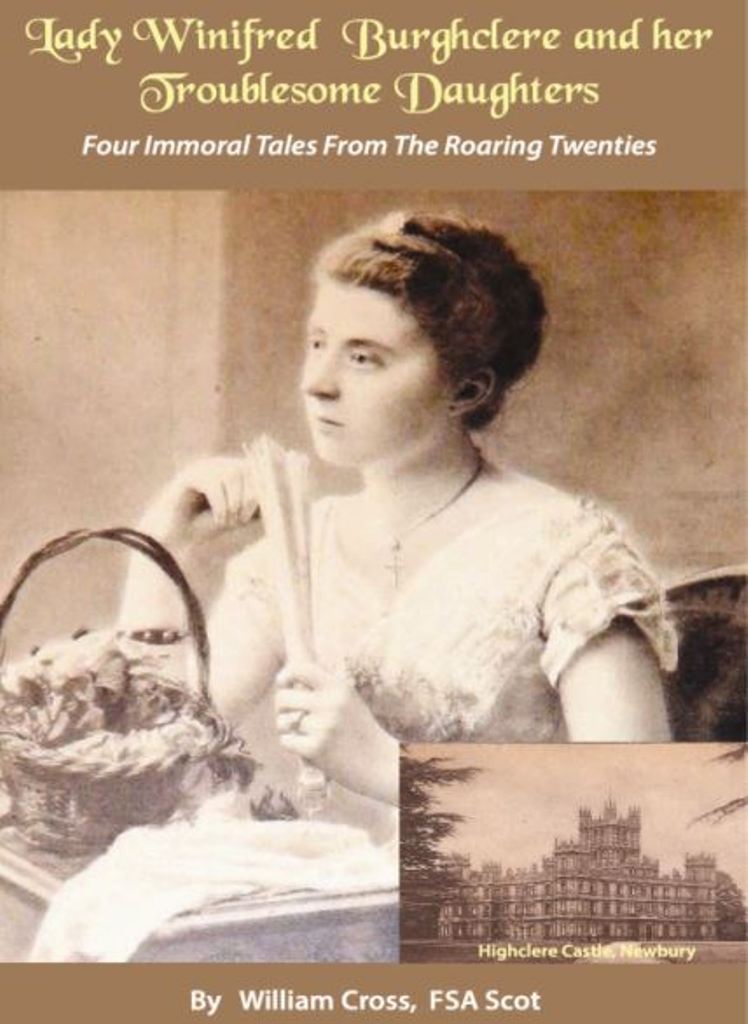
Small in stature, often haughty and snooty by nature, Winifred Herbert [i] grew up to be best known as Lady Burghclere, wife of a quixotic Victorian figure named Herbert Gardner, [ii] the illegitimate son of a peer. Herbert was a Liberal MP, playwright and sportsman who was elevated to the peerage as the first (and, as he had no son, the only) Lord Burghclere[iii]. When they wed he was almost 20 years older than Winifred.
The marital union of Winifred and Herbert Gardner in 1890 was a much happier occurrence than her first doubly tragic experience of wedlock in 1887 when she married a soldier, another older man, one of the sons of the George Byng, 2nd Earl of Strafford.
Winifred’s first husband was Captain the Hon. Alfred John George Byng, [iv] an officer in the 7th Hussars. They had met in c. 1885 in Ireland when Alfred was attached to the Lord Lieutenant/ Viceroy of Ireland’s pool of ADCs. Winifred’s father, Henry Herbert, the 4th Earl of Carnarvon,[v] was at the time Viceroy of Ireland. Henry was the very model of the Victorian statesman and served Prime Ministers Derby, Disraeli and the Marquis of Salisbury in minor Cabinet posts. [vi]
Although Winfred’s first husband, Alfred, was a man rich enough to support an Earl’s daughter, he was not cut out for addressing a woman’s love needs, nor the associated duties of a healthy marriage. The relationship was not consummated. Byng was impotent, infertile, incapable, or all three, although mercifully for Winifred’s loss of virginity and sanity she was saved a lifetime of lying and silent misery as Alfred died scarcely after a year from when they had been unhappily joined together.
Winifred was clever, sharp-minded and scholarly. After being widowed for the first time she craved for a man who performed his duties in the bedroom. Herbert Gardner was grabbed as Winifred, being a married women, was deemed soiled goods. He was the bastard son of a peer and the couple had four very remarkable Gardner daughters, each of whom turned heads with their failed marriages, society antics and fall-out before, during and after their debutante years from 1914 until their mother’s death in 1933.
As the Burghclere daughters became fodder for gossip mongers and hit the newspaper headlines Herbert Gardner got off lightly; he died in 1921 before his daughters set London Society talking.
People in Glass Houses
The Gardners were never hugely rich, but comfortably enough off. Herbert was a shrewd investor in the railways and shipping companies and provided for his womenfolk.
He was a character well-known in political, theatrical and literary spheres in the late 19th/ early 20th century and his death was a loss, it was said, from which Winifred never recovered.
The various branches of their extended kinfolk were far from snowy white. The Gardners were tainted by illegitimacy. Winifred’s side, the Herberts (Carnarvons) of Highclere Castle, had dark spots in their history and were blighted by the effects of inbreeding with cousins marrying cousins.
Winifred was often critical of others but it was a case for the proverb “ people in glass houses……”. Winifred was aloof, careful and coy; Herbert Gardner was not so circumspect and there were suggestions of shiftiness, impropriety and keeping bad company but, then, he was from a theatrical background and his quaint manners were put down to that profession’s disreputable ways. In some respects the prissy Winifred and the less serious, jocular Herbert, were an odd ball mix.
A suggestion of double standards was applied by some to Herbert and Winifred’s wider family. It was easy for aristocrats to hide their secrets and foibles, especially Victorian men. In the decades ahead it was less easy for Winifred to dismiss her part in causing at least some of the bad behaviour of her four wayward daughters.[vii] They were wildcats. But, Winifred’s mothering skills were not her priority.
The Four Gardner Girls
These racy, remarkable and troublesome Gardner girls were first paraded across the pages of Society magazines as beautiful nymph-like children. Yet they were four little horrors. They changed from childhood angels into marriage breakers, bordering on neurotics; in one case a lesbian, another an incurable depressant who married a homosexual, all before their mother was dead. The girls were as unlike their ultra conservative-minded mother as any woman could be and as they grew up into womanhood Winifred was neither proud nor pleased at their exploits or choice of friends, husbands or relationships.
Despite the dowdy Princess Mary (daughter of King George V and Queen Mary) being a close friend of several of the Burghclere daughters, and the ever present fear of a Royal personage being thought unsuitable for such friendship, the Gardner girls disgraced themselves anyway. Three of the girls, Mary, Evelyn and Juliet were all divorced during their mother’s life-time. Evelyn was the infamous ‘She- Evelyn’, the first wife of the writer Evelyn Waugh. [viii] Alathea continued in a rocky and miserable marriage with a homosexual Downing Street Civil Servant, Sir Geoffrey Fry [ix]who served several Prime Ministers. Alathea’s mental and physical health were always in constant turmoil.
The second Gardner daughter, Juliet, deserted her husband in 1916 on the same night as her wedding, although this scandal that was well-known about in private circles was blocked as news, Juliet declaring that she “did not intend to see, write, or live with him again”[x]. She was not cut for marriage and tried her hand at writing. A novel was promised but this did not emerge beyond mention of it in 1922, the same year she was formally divorced. Juliet shocked her mother a few years later by a humiliating public announcement that she was seeking secretarial work but she was quite prepared to scrub floors or wash dirty dishes. She also went to live with another woman in what was a more acceptable form of love than she found in being married to a man.
Winifred’s third daughter Mary married Geoffrey Hope Morley[xi], the heir to a barony. She bore him two pretty daughters but was quickly unhappy being “a draper’s wife”[xii], (the Morley family were in drapery). Mary found a lover and he became her second husband, a more exciting figure than Morley. Alan Hillgarth[xiii] could not have been more different. As Hillgarth became a diplomat, marriage meant a move to Spain where Mary had a son but she later divorced Hillgarth and devoted her life to cookery and maintaining her gardens in Spain.
The fourth and last daughter, “the bun faced one”[xiv] Evelyn, became famous as the first wife of the novelist Evelyn Waugh[xv]. ‘She-Evelyn’ broke away from family ties when she rented a flat with her chum Pansy Pakenham[xvi]. The mothers of each girl were friends, too. Pansy’s mother, Lady Longford (whose husband was killed in the Great War) and Winifred soon found their respective daughters were untameable. ‘She Evelyn’ was engaged to be married to nine different men before she settled for a brief encounter with Evelyn Waugh, when he was on the rebound from homosexual affairs with Alistair Hugh Graham[xvii] and others in the 1920s Oxford brigade of fun loving artistic, bohemian types that were dubbed the ‘Bright Young Things’.
Winifred’s brother George Herbert, Lord Porchester[xviii] and her two sisters, Lady Margaret Duckworth[xix] and Lady Victoria Herbert[xx], offered little stronger or steadier morality or standing, as did their half brothers Aubrey[xxi]and Mervyn Herbert[xxii]. George was a gambler, bully and had secret sexual desires.[xxiii] Margaret was married to a child abuser and Victoria (Vera) was always a strange sort of fussy, man hating creature, brought up by her stepmother, the 4th Earl of Carnarvon’s second wife, Elizabeth (Elsie) Howard.[xxiv] Vera became very much like her maiden aunt, her father’s eccentric sister Lady Gwendolen[xxv] who lived in a kind of never-never land and had no time for male persons, whether they were adult or child. That said, it is suggested that Vera’s only love, a member of the nobility was killed in the Great War. [xxvi]
III
Winifred Burghclere had for a father Henry Herbert, a straight-faced Victorian aristocrat – a studious classical scholar, politician-statesman who played some part in British Colonial and Irish political history. Her brother George was the man who, with Howard Carter[xxvii], discovered the Tomb of Tutankhamun; her half brother was the adventurous Aubrey Herbert, a friend of T.E. Lawrence (of Arabia), “the most whimsical and beloved figure in the political life”[xxviii] of Britain in the era before the Great War.
Winfred The Writer & Historian
As well as being a Victorian politician’s wife, a Society hostess and the birth mother of four daughters, Winifred saw herself moreso as a serious historian and writer who “was diligent and exact in research.”[xxix]
As a compiler of histories she specialised in the seventeenth century, and wrote books on Restoration figures, it was said “to set in their proper perspective ….. greatly misunderstood men.”[xxx] She was a skilful chronicler of past society and edited several books of Letters, most notably those of the friend of the Duke of Wellington, the Lady Salisbury who became Lady Derby and some family histories including a book on her father’s brother Alan Herbert, who was a doctor in France.[xxxi].
It was said that no-one who met Lady Burghclere casually would have guessed that she was a wife, mother and scholar combined. On the surface she appeared “notably light in hand, utterly without pedantry, quick to appreciate any scintilla of humour.” [xxxii]
But in reality life’s cut had taught Winifred to be as hard as nails. She could be pushy, obstinate and uncompromising. Her own mother, Lady Evelyn Stanhope[xxxiii], the first 4th Countess of Carnarvon, died when she was eleven.
Winifred was tested when first widowed very young, then a few years later she chanced on marrying Herbert Gardner, (as recorded, above), a playwright, poet, middle ranking MP and Liberal politician, who was raised to the peerage as Lord Burghclere, and briefly held a Cabinet position. Herbert always wore the air of a laid back country squire but, like Winifred, had a much sterner side: “few would have guessed he was such a sombre man at heart”[xxxiv].
But Winfred’s hardest test in life was her troublesome daughters.
William Cross, FSA Scot, Newport, South Wales. 25 December 2022
[i] Winifred Anne Henrietta Herbert (1864-1933).
[ii] Herbert Colstoun Gardner, (1846-1921). Winifred’s second husband.
[iii] Burghclere is a hamlet in Berkshire adjoining others like Kingsclere, the most famous being Highclere, the seat of the Herbert/Carnarvon family.
[iv] Alfred Byng (1851-1887). Soldier. Winifred’s first husband.
[v] Henry Herbert (1831-1890). 4th Earl of Carnarvon. Winifred’s father.
[vi] His Under-Secretary at the Colonies Department, Frederick Rogers, said of Lord Carnarvon ‘He had a generous desire to effect worthy objects, and also more, I think, of a wish to shine before the public and to distinguish himself in the ordinary sense of the word. His failing was rather too much self-consciousness, and a disposition to be caught by showy schemes.’ adding ‘though he was fully aware of his own abilities and desirous of receiving credit for them particularly in his measures and public appearances, he was given to take a second part in conversation, always wishing to draw others out than to speak himself’: G.E. Marindin (ed.), Letters of Frederick, Lord Blachford, Under-Secretary of State for the Colonies, 1860–1871 (London, 1896), p. 263.
[vii] Names and dates for the four daughters of Winifred and Herbert Gardner are
Juliet Mary Evelyn Stanhope Gardner (1892-1974).
Alathea Margaret Gwendolen Valentine Gardner (1893-1968).
Mary Sidney Katharine Almina Gardner (1896-1982).
Evelyn Florence Margaret Winifred Gardner ( 1903-1994)
[viii] It was said that their friends referred to the two Evelyns as “He-Evelyn” and “She-Evelyn” and the term stuck.
[ix] [ Sir] Geoffrey Storrs Fry (1888-1960).
[x] Reported in 1922 when Juliet was divorced.
[xi] Geoffrey Hope Morley (1885-1977) 2nd Baron Hollenden. Twice married.
[xii] Conversations between the Author and Tony Leadbetter (1938-2019), godson of Almina Carnarvon who lived with the Countess for over 30 years.
[xiii] Alan Hillgarth (1899-1978). Captain Alan Hugh Hillgarth CMG OBE was a British adventure novelist and member of the intelligence services, perhaps best known for his activities in Spain during and after the Spanish Civil War.
[xiv] A nickname applied.
[xv] Evelyn Waugh (1903-1966). Writer and Novelist.
[xvi] Patsy Pakenham (1904-1999) Later Lady Lamb.
[xvii] Alistair Hugh Graham (1904-1982). Close friend of Evelyn Waugh in 1920s. Diplomat and recluse.
[xviii] George Edward Stanhope Molyneux Herbert (1866-1923). Lord Porchester, 5th Earl of Carnarvon. Winifred’s brother.
[xix] Lady Margaret Duckworth (1878-1958) nee Herbert. Wife and widow of Sir George Duckworth (1868-1934). She was Winifred’s sister.
[xx] Lady Victoria Herbert (1874-1957). Known as “Baby” or “Vera”. Winifred’s sister.
[xxi] Aubrey Herbert (1880-1923). Winifred’s half brother.
[xxii] Mervyn Herbert (1882-1929). Winifred’s half brother.
[xxiii] See the Author’s books on the Carnarvons, in particular “ Carnarvon, Carter and Tutankhamun Revisited” (2019) & “Lies, Damned Lies and the Carnarvons” (2022). Book Midden Publishing.
[xxiv] Elizabeth [Elsie] Howard (1854-1929). 2nd 4th Countess of Carnarvon. Winifred’s stepmother.
[xxv] Lady Gwendolen Herbert (1842-1915 ). Winifred’s aunt.
[xxvi] Almina Carnarvon’s godson Tony Leadbetter thought Vera had a soft spot for Raymond Asquith (1878-1916) son of the Prime Minister but as he was a married man any romance was doomed. Raymond was a friend of Vera’s half brother Aubrey Herbert.
[xxvii] Howard Carter (1874-1939). Egyptologist and co-discoverer with the 5th Earl of Carnarvon of the Tomb of Tutankhamun.
[xxviii] Sunday Times, 8 October, 1933.
[xxix] Ibid.
[xxx] Ibid.
[xxxi] Winifred books include “George Villiers, Second Duke Of Buckingham, 1628-1687 : A Study In The History Of The Restoration”; “The Life of James First Duke of Ormonde”;
“Stratford (Volumes 1 & 2)”; A Great Lady’s Friiendships Letters to Mary, Marchioness of Salisbury Countess of Derby 1862-1890; “Alan Herbert 1836-1907, Letters & Memories” Various publishers and editions.
[xxxii] Sunday Times, 8 October 1933.
[xxxiii] Lady Evelyn Stanhope ( 1834-1875). 4th Countess of Carnarvon. Winfred’s mother.
[xxxiv] Sunday Times, 8 October 1933.
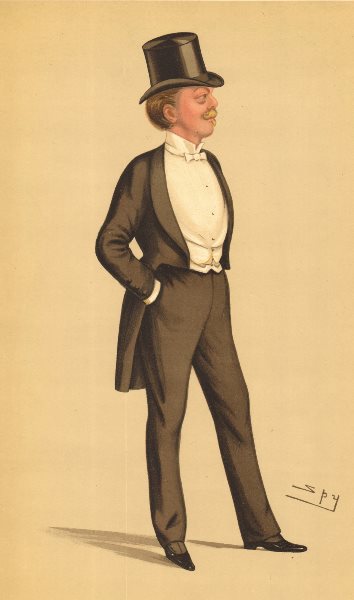
Herbert Coulson Gardner, first and last Lord Burghclere
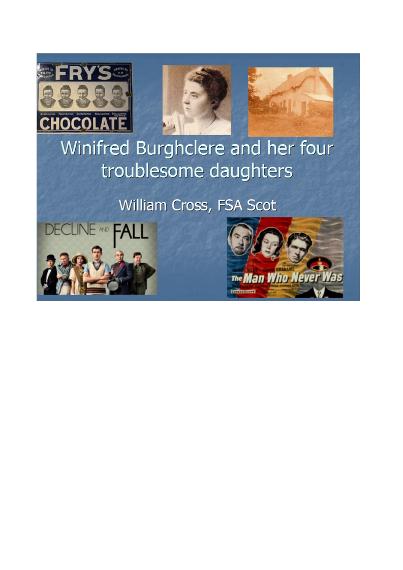
ALSO AVAILABLE FROM WILLIAM CROSS IS AN ILLSTRATED TALK ON THE BOOK
Winifred Burghclere was the clever sister of the Lord Carnarvon who discovered Tutankhamun, a biographer of Restoration toffs & a lady of letters. Her early years were spent at HighclereCastle, the back drop to TV’s ‘Downton Abbey’. She was also farmed out to various relatives. Her widower father, Henry Herbert, the 4th Earl, a Cabinet Minister made her his private secretary. Winifred learned early on how to keep secrets & mixed easily with literary folk in her Aunts’ exalted circles. Twice married she produced four lively, racy daughters from her second marriage to the quixotic Herbert Gardner, an actor-playwright who turned to politics, a former Liberal Cabinet raised to the peerage as Lord Burghclere ( pronouned Burclair!).
Lady Burghclere was a stickler for rules, duty and old world values. She completely hemmed her daughters in, they were kept under their mother’s iron grip, bullied, raised by nannies and schooled by governesses. The girls were the Hon. Juliet, Alathea, Mary & Evelyn Gardner, born between 1893 and 1903. Each had a long string of other forenames. They began as a peculiar mix of the prudish & moral, it was said they were “as naive as nuns“ then they became the complete flip side of this, amoral & troublesome.
The Gardner girls’ rebellious period overlapped with the Great War & aftermath into the ‘Bright Young Things’ era and the roaring twenties. Each of the girls had disastrous marriages, Juliet left her husband the same night as the wedding; Mary married too soon before having enough girlish fun. The husbands were on the surface interesting men like Geoffrey Fry a member of the Fry’s chocolate family, he was Private Secretary to several Prime Ministers and married the very disturbed, slim, boyish, Alethea. The youngest Gardner daughter Evelyn was the first wife of Evelyn Waugh, the writer of ‘Decline and Fall’ & ‘Brideshead Revisited’ . As a couple they pop up in the infamous ‘He Evelyn-She Evelyn’ partnership of the late 1920s.
In this tale of aristocratic snobbery, scandal & mad cap love affairs William Cross (author of several books on the Carnarvons) offers a quaint blend of factual, amusing & shocking tales of hideous child rearing, reflecting that money & position brings inevitable pain and excesses and temptations and proves that the search for happiness and contentment is far from straight forward.
Contact William Cross for further information about the book/ talk.
E-mail: